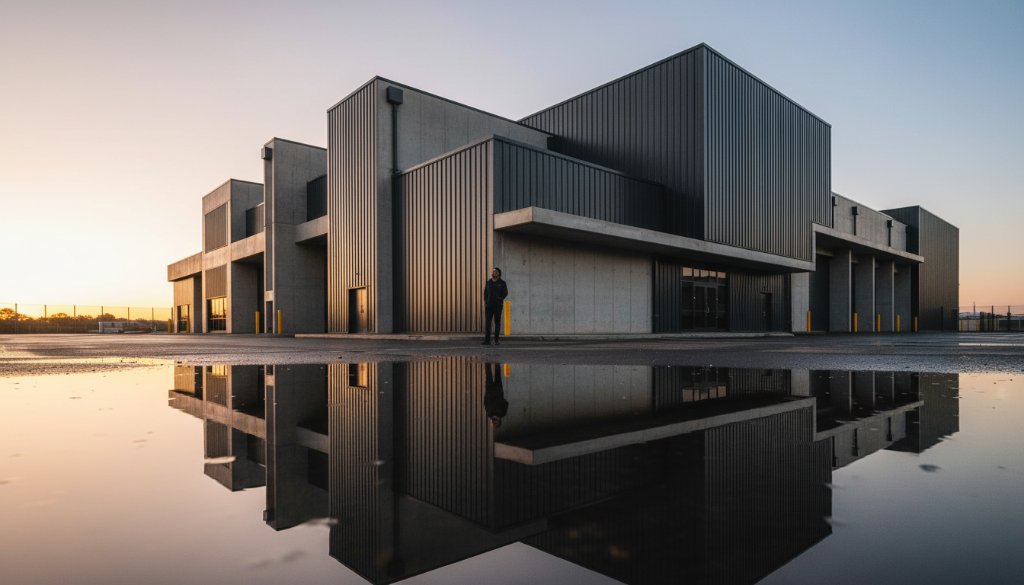
Nestled within Melbourne’s vibrant south-east, Skye, Victoria, may not immediately spring to mind as a hub for architectural wonders. However, for the discerning eye, this evolving locale offers a unique canvas, particularly when it comes to industrial design. Our focus today is on Capturing Skye Victoria industrial architecture photography, revealing the often-overlooked beauty in its functional structures.
Skye presents a fascinating blend of new residential developments and burgeoning light industrial zones. It’s here, amidst the practicalities of warehouses, logistical hubs, and manufacturing facilities, that a raw, unpolished aesthetic emerges. These buildings, often designed for purpose over ostentation, possess a unique character—defined by their robust materials, clean lines, and imposing scale. For an architecture photographer, Skye offers a chance to explore brutalist influences, modern utilitarian design, and the interplay of steel, concrete, and glass against the Australian sky.
The Allure of Industrial Forms in Skye
The industrial buildings in Skye, especially those along major arteries like the Western Port Highway and close to the Eastlink, tell a story of commerce, innovation, and practical design. What makes them compelling subjects for photography is their honesty. There’s no elaborate ornamentation; instead, beauty is found in repetition, texture, shadow play, and the way light interacts with large, unadorned surfaces. Think about the stark contrast of a corrugated iron facade under a clear blue sky, or the intricate patterns created by a network of pipes and vents. These elements, when captured thoughtfully, can transform the ordinary into the extraordinary.
Unlocking the Potential of Skye Victoria Industrial Architecture Photography
To truly excel in Capturing Skye Victoria industrial architecture photography, consider these expert tips:
- Embrace Leading Lines: Industrial structures are often rich with strong horizontal and vertical lines. Utilise these to guide the viewer’s eye through your composition, creating depth and a sense of order.
- Texture and Detail: Don’t just photograph the whole building. Zoom in on the rust, the rivets, the weathered concrete, or the reflective sheen of new metal. These details add character and tell a deeper story.
- Play with Light and Shadow: Early morning or late afternoon light can dramatically transform an industrial scene, creating harsh shadows and brilliant highlights that accentuate the building’s form. Overcast days can also work wonders, providing soft, even light that reveals every detail without harshness.
- Unique Perspectives: Get low, go high (safely!), or look for abstract angles. A drone can offer unparalleled views of sprawling industrial complexes, highlighting their scale and layout.
- Context is Key: While the architecture is the star, sometimes including elements of the surrounding environment—a solitary tree, a passing vehicle, or even the vast open sky—can provide a sense of place and scale.
Remember that industrial sites, by their nature, are often private property. Always seek necessary permissions before photographing, especially if you plan to enter fenced areas or use drones. Respecting local regulations and private property is paramount to professional conduct.